A Rainy-Day Movement Plan for a Small Room
A rainy-day movement plan for a small room helps you find a clear, comfortable patch of floor and choose familiar movements without shifting heavy furniture.
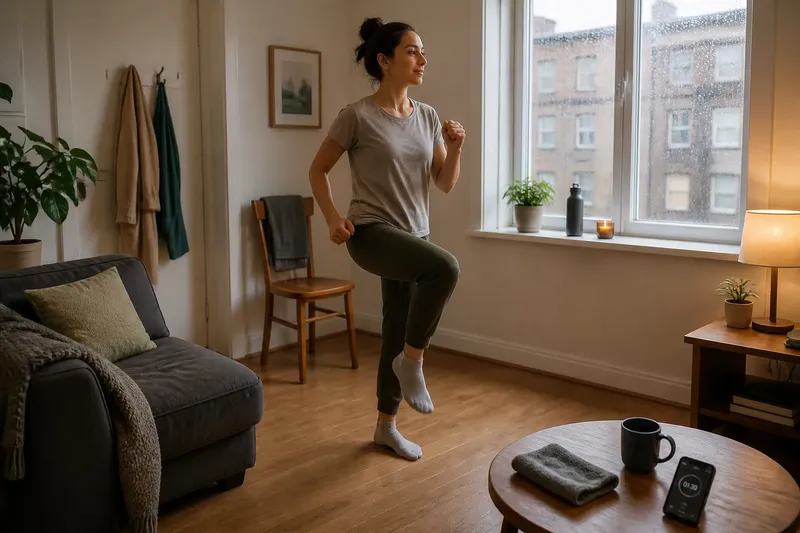
The common mistake with a rainy-day movement plan for a small room is trying to make space for a full workout by shifting furniture and gathering equipment. That can turn a simple indoor break into a chore, while clutter may leave too little room to move comfortably. Start with one clear patch of floor, familiar motions and permission to keep the pace easy.
Choose a patch of floor before choosing movements
Look for a space where you can stand with your arms relaxed and take a small step in either direction. It might be beside the bed, in front of a sofa or along a clear stretch of hallway. The exact shape matters less than being able to move without reaching towards a sharp corner or knocking into a lamp.
Stay within the room you already use. Moving a dining chair aside may be enough; dragging a heavy table is usually a poor start to a gentle activity break. If the room is shared, choose a time and spot that do not block a doorway or someone else’s usual route.
Check the floor and nearby objects
Before you begin, look for loose objects, trailing cables and anything that could slide underfoot. A shifting rug may be less suitable than a bare, dry floor. Wear clothing that lets you reach and bend without tugging, and choose shoes or bare feet according to what feels steady on the surface.
A stable dining chair can offer a place to rest or a light handhold. Do not rely on a rolling chair for balance. You do not need a mat or special kit; if you use a mat, check that it lies flat and does not crowd the clear patch.
- Check whether the floor is dry and clear; if it is, use the patch, but if it is wet or cluttered, choose another spot or wait until it is clear.
- Check whether a rug stays firmly in place; if it does, leave it, but if it shifts, move to a stable bare floor rather than exercising on it.
- Check whether cables cross your movement area; if they do, route them away only if that is safe, otherwise choose a different patch.
- Check whether a chair is stable; if it is, keep it nearby for rest or light support, but if it rolls or wobbles, do not use it for balance.
- Check whether the patch leaves the doorway and shared route open; if it does, use it, but if it blocks someone’s path, choose another time or location.
- Check whether you can take a small step without contacting furniture; if you can, standing movements are an option, but if you cannot, choose seated movements or skip the interval.
Pick motions you already know
Choose ordinary, comfortable movements rather than unfamiliar poses that need close attention. A slow march on the spot, shoulder rolls, gentle side steps and standing reaches can make a small sequence feel varied without requiring you to cross the room. Keep each movement within a range you can control easily.
Consider the position you have been in most. After sitting at a desk, a few relaxed shoulder circles and a slow stand may feel useful. After standing, you might prefer a seated ankle movement or a gentle weight shift. This is a change of posture, not a demand to work through discomfort.
Give the interval a clear beginning and end
A short interval is easier to start when it has a boundary. You might move until one familiar song ends or set a quiet timer on your phone or a kitchen timer. The aim is not to reach a target; it is to know when you can stop.
Begin with an easy motion, then move between a small number of choices. Finish by standing or sitting still for a moment and noticing whether you feel ready to return to what you were doing. Leave out any movement that feels awkward, tiring or difficult to control.
Build a sequence that stays in one place
In a small room, it helps to stay in one place rather than plan a route. Alternate a standing movement with a seated one, or change the direction of a small step while keeping clear of furniture. This makes the sequence easier to remember and less likely to bring you close to an obstacle.
Say you have a clear patch beside the sofa, a sturdy chair nearby, a phone timer and no loose objects on the floor. Start with a slow march in place, then pause the timer briefly for a few shoulder rolls. Sit in the chair for gentle ankle circles, then stand comfortably to finish. The resulting sequence changes your posture and movement without requiring you to rearrange the room or cross it.
Adjust the plan to the day
Rain may make an indoor interval convenient, but the room and your energy can vary. If the floor feels cramped, choose seated movements. If you are tired, shorten the sequence or keep to one comfortable motion. If someone else needs the space, wait, choose another clear spot or leave the plan for later.
Treat the plan as a menu, not a routine you must complete. Familiarity can make it easier to begin, while flexibility keeps the activity suited to the room you have. Stop if a movement causes pain, dizziness or unusual discomfort. If you have concerns related to a health condition or mobility, ask a qualified health professional for advice.
Leave the room ready for next time
When you finish, return any moved chair to its usual place and leave the floor as you found it. If you used a timer, keep using your phone or kitchen timer; there is no need to install an activity app or track performance. A setup that takes little effort is easier to fit into an ordinary rainy afternoon.
A rainy-day movement plan for a small room needs only a clear patch, familiar motions and an easy way to stop. Keep the option simple enough to adapt when the room, your energy or the people around you change.
What do readers ask about moving in a small room?
How much clear floor space do I need?
Choose enough room to stand comfortably, move your arms within an easy range and take a small step without contacting furniture. If that is not possible, choose seated movements rather than squeezing into an awkward gap.
What movements can I do without equipment?
Try comfortable motions such as shoulder rolls, gentle marching in place or controlled side steps. Use movements you already know how to do comfortably, and keep the floor free of loose items.
How long should an indoor movement interval last?
Choose a short duration that fits your day, such as the length of a song or a brief timer. You can stop sooner if you feel uncomfortable; there is no need to complete a set amount.
Should I move furniture before I begin?
Move only a light item if it is easy and safe to shift, and avoid blocking doors or shared routes. If clearing the room takes more effort than the movement itself, adapt the sequence to the space you have.