Park Loop or Street Grid: Choosing a Shape for a Short Walk
Choose a park loop or street-grid route for a short walk by matching wayfinding, changing scenery and street conditions to the kind of outing you want.
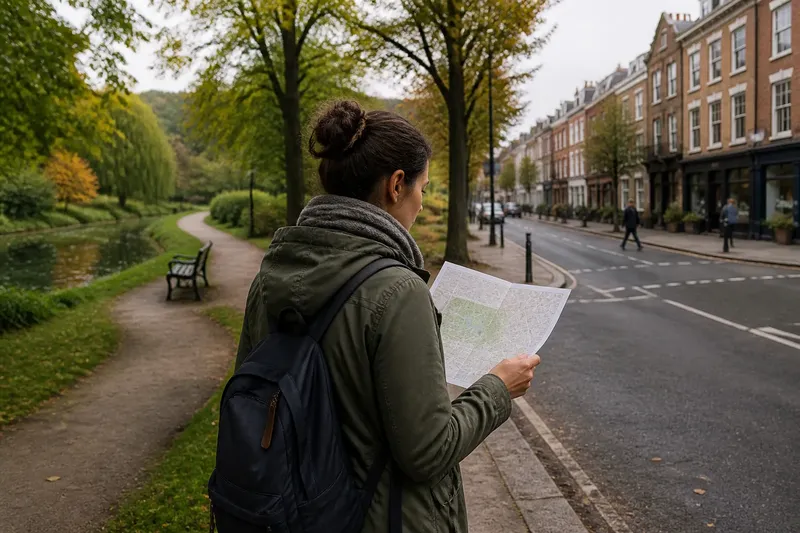
The common mistake with a short city walk is choosing a route by distance alone, then discovering that its turns, crossings or scenery do not suit the time or mood available. A park loop or street-grid route can cover similar ground but feel quite different. Choose the shape first, then make the route fit your surroundings and attention.
Decide what you want from the walk
Start with the experience you want, not a target to hit. A compact circuit through a park tends to keep you within a bounded area, with trees, paths or open lawns setting the scene. A street-grid route gives you a sequence of blocks, corners and shopfronts, with more chances to change direction or pass a useful destination.
Ask yourself what would make the walk feel easy to begin. If you want fewer decisions once you set off, a loop may suit you. If you enjoy noticing different streets, or want to pass a particular bakery, library or pocket garden, a grid may be more appealing.
Also consider the kind of attention you have available. A familiar park circuit can leave your mind free to wander. A route through streets may hold your interest with changing windows, trees and activity, but it asks you to pay closer attention to traffic and crossings.
Choose a park loop or street-grid route by reading the map
Open a local map app or a paper street map and find a starting point you can reach without adding a separate journey. Look for the park entrance or street corner that would make a natural beginning. A route that starts near your home, workplace, bus stop or regular destination is easier to fit into an ordinary day.
For a park loop, trace a circuit that returns to the same entrance or a nearby exit. Check whether paths connect clearly, whether the loop passes through the kind of setting you want, and whether there is a straightforward way to leave early. A park can contain several intersecting paths; choose landmarks such as a pond, playground, garden gate or sports court to keep the circuit legible.
For a street grid, identify a short sequence of blocks that brings you back to your starting area. Look for streets with pavements and crossings that make sense for your route. A simple rectangle is often easier to hold in mind than a route with many turns: walk along one street, turn, cross another block, then return by a parallel street.
Do not assume that a neat line on a screen is a comfortable route. A park path may be closed, muddy or crowded; a street may have a difficult junction or a narrow pavement. Use the map to sketch an option, then adjust it to the conditions you can see when you arrive.
Compare the route shapes before setting off
Wayfinding is the clearest difference. On a compact loop, you can orient yourself around a handful of landmarks and finish where you began. This can feel reassuring if you do not want to keep checking directions. In a street grid, blocks and corners provide their own structure, but every turn adds a small decision. Choose a route with a clear pattern rather than one that depends on remembering a string of street names.
Variety works differently, too. A park loop may pass from shade to open ground or from a quiet path to a busier play area, but it can also repeat the same view. Streets can change character from block to block, with cafés, front gardens, bus stops and local shops along the way. That variety can make a short outing feel eventful, although traffic and construction may interrupt the pleasant parts.
Think about surroundings as a practical preference, not a ranking. Choose the park if you would rather be among planting, open space or other people taking recreation. Choose streets if you prefer visible city activity, shop windows or the feeling of moving through a neighbourhood. Either can be quiet or lively depending on the place and time.
Consider how much flexibility matters. A loop can be easy to shorten if paths offer several exits, but it may feel inconvenient if the route commits you to a distant side of the park. A grid often has many possible turning points, so you can head back sooner or extend the outing by another block. That flexibility depends on crossings and pavements being comfortable for you.
Check the conditions that can change the choice
Before leaving, check what is happening on the ground. In a park, notice open entrances, path surfaces, lighting and any signs about maintenance or temporary closures. On streets, look for roadworks, busy junctions, pavement obstructions and crossings that allow enough time for an unhurried pace.
Time of day can alter the feel of either shape. A park that seems calm during daylight may feel too isolated for your preference later. A lively street can become quieter after shops close, while a busy route may be noisy at commuting times. If you are unsure, choose a place where other people are present and where you can easily change course.
Weather affects the decision as well. A tree-lined park path may offer shelter from sun, while a paved grid may give you more chances to step indoors or pause under an awning. After rain, uneven paths and slick leaves can call for extra care. Wear footwear that feels secure on the surface you expect to encounter.
Make a quick accessibility check that reflects your own needs. Look for kerb-free crossings, smooth paths, benches or places to pause if those matter to you. Map listings can be incomplete, so rely on signs and visible conditions when you arrive. If the route does not feel workable, change it rather than trying to force the original plan.
Match the route to the mood you have today
Say you have a spare stretch of time before meeting a friend and want a calm walk without checking your phone at each corner. Imagine a small park near the meeting place with a clear path past a pond and back to the entrance. You could choose that loop, use the pond and entrance as landmarks, then leave by the same gate with time to spare. If the path is closed or feels too quiet, switch to a nearby street rectangle with visible shops and a direct return.
The point is not to treat one shape as the better route. It is to give yourself a useful fallback. A park loop suits a walk where containment and a natural setting matter; a grid suits one where changing views and easy route adjustments are more appealing. A short walk can also combine them: cross a park and return along a street, if the exits and crossings make that straightforward.
Keep the route simple enough to remember without turning the outing into a navigation task. You might note one landmark and one point where you can shorten the route. If you use a map app, check it before setting off and put the phone away when you no longer need directions. Keep your attention on your surroundings, especially at road crossings.
Which route shape fits your short walk?
Is a park loop easier to follow than a street grid?
Often, a loop with distinct landmarks is easier to hold in mind because it returns you to a familiar point. A street grid can be just as clear if you choose a simple pattern with a small number of turns.
Which route offers more variety?
Street grids often change from block to block, while park paths may offer shifts in planting, open space and activity within one setting. The more varied choice depends on the particular park or neighbourhood, not on the route shape alone.
Can I combine a park loop with city streets?
Yes, if the park has a convenient entrance and exit and the connecting streets feel comfortable to walk. A route that enters through one gate and leaves by another can add variety without requiring a complicated plan.
What should I do if the planned route feels uncomfortable?
Choose a nearby alternative, shorten the outing or turn back. Your route is a suggestion, not an obligation; changing it is sensible when a path, crossing or surrounding area does not suit you.
Make the next walk easier to choose
After you finish, remember what mattered most: an obvious circuit, a favourite stretch of greenery, an interesting row of shops, or the option to head home early. Those details help you choose a park loop or street-grid route next time without overthinking the map.
Keep more than one short route in mind if your neighbourhood allows it. A familiar park circuit can be your low-decision option, while a nearby grid can offer a change of scenery. The useful route is the one whose surroundings and turns feel right for the walk you have room for today.